






Hand and Wrist Pain and Common Conditions
Many issues can cause hand or wrist pain, from aging-related wear and tear to traumatic injuries such as sprains and fractures. Whatever the cause, the resulting pain and loss of function can affect your ability to work, play sports, and perform everyday activities like cooking, cleaning, and getting dressed.
This page explains some of the common conditions that affect the finger, thumb, hand, and wrist, as well as some general treatment options. Your doctor can give you more detailed information about your pain and come up with a plan to help address your symptoms.
Anatomy
The wrist is a complex joint that connects the hand to the forearm. It is formed by the radius, the ulna, and eight small carpal bones that are arranged in two rows at the base of the hand. There are four carpal bones in each row
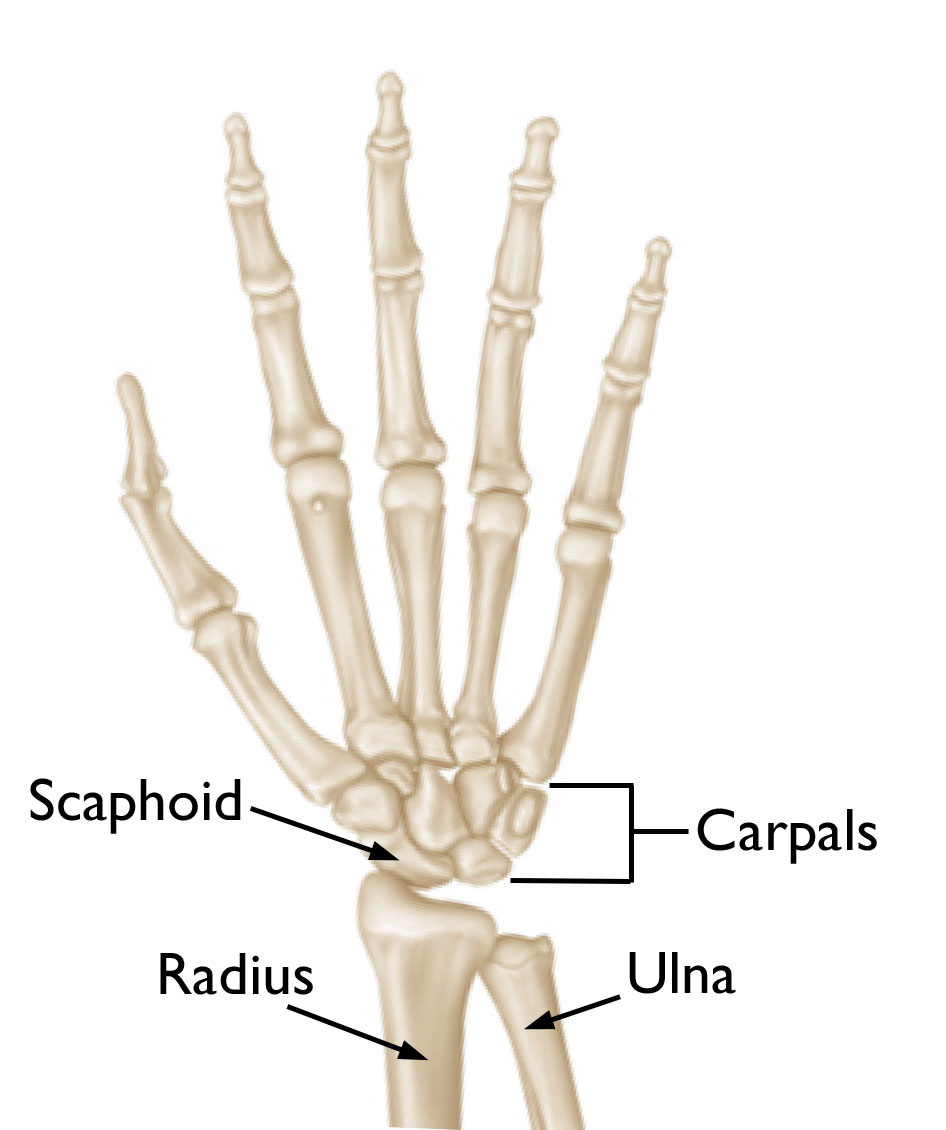
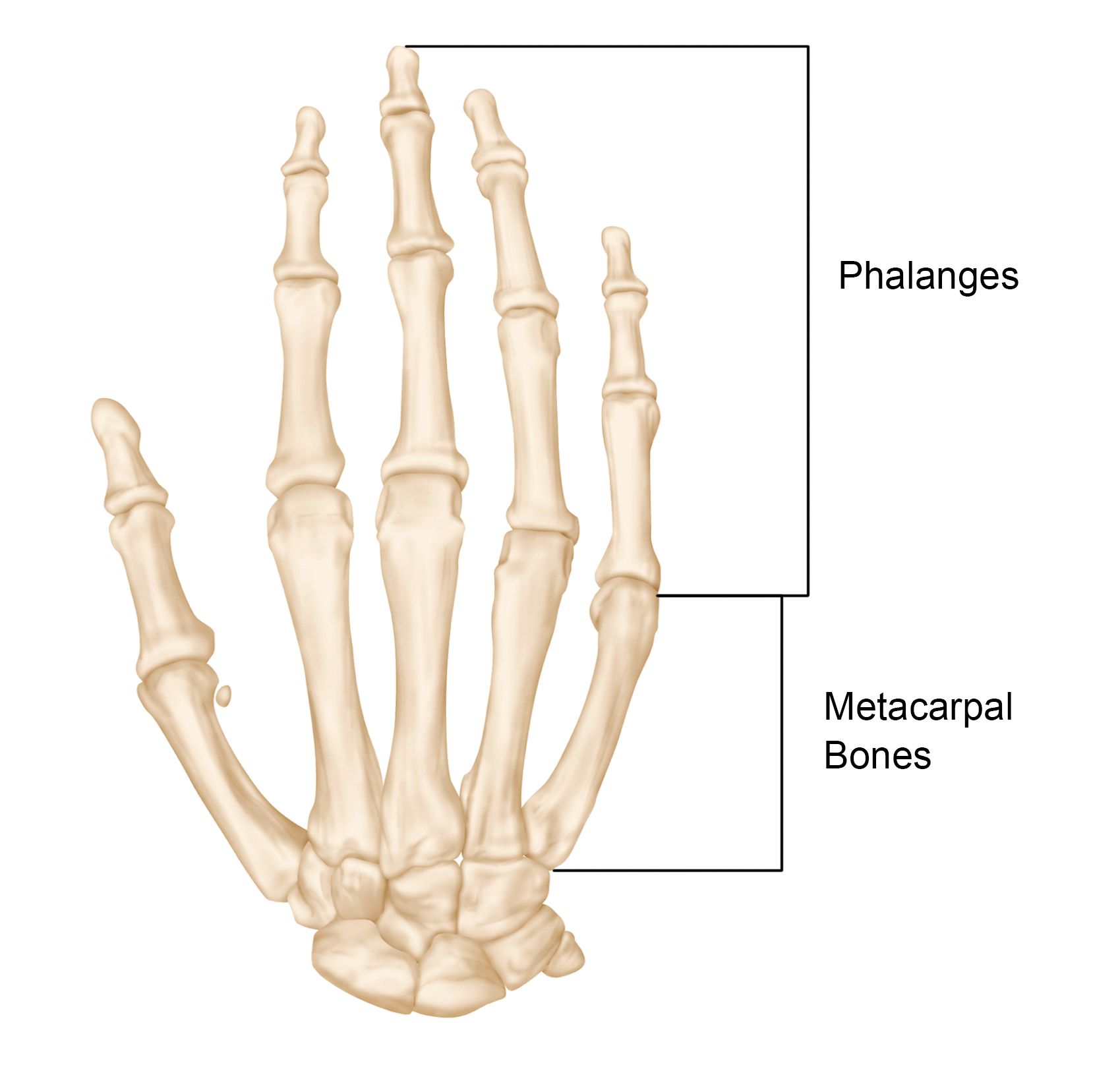
The bones in your hand include:
- Phalanges. These are the small bones that form the thumb and fingers. There are two phalanges in the thumb and three in each of the fingers.
- Metacarpals. These are the five bones located in the palm of the hand. The metacarpals connect the fingers to the hand and wrist.
The interphalangeal joints are the joints in the middle and at the end of the fingers and in the middle of the thumb. They allow the fingers and thumb to straighten (e.g., to point) and flex (e.g., to grab an object).
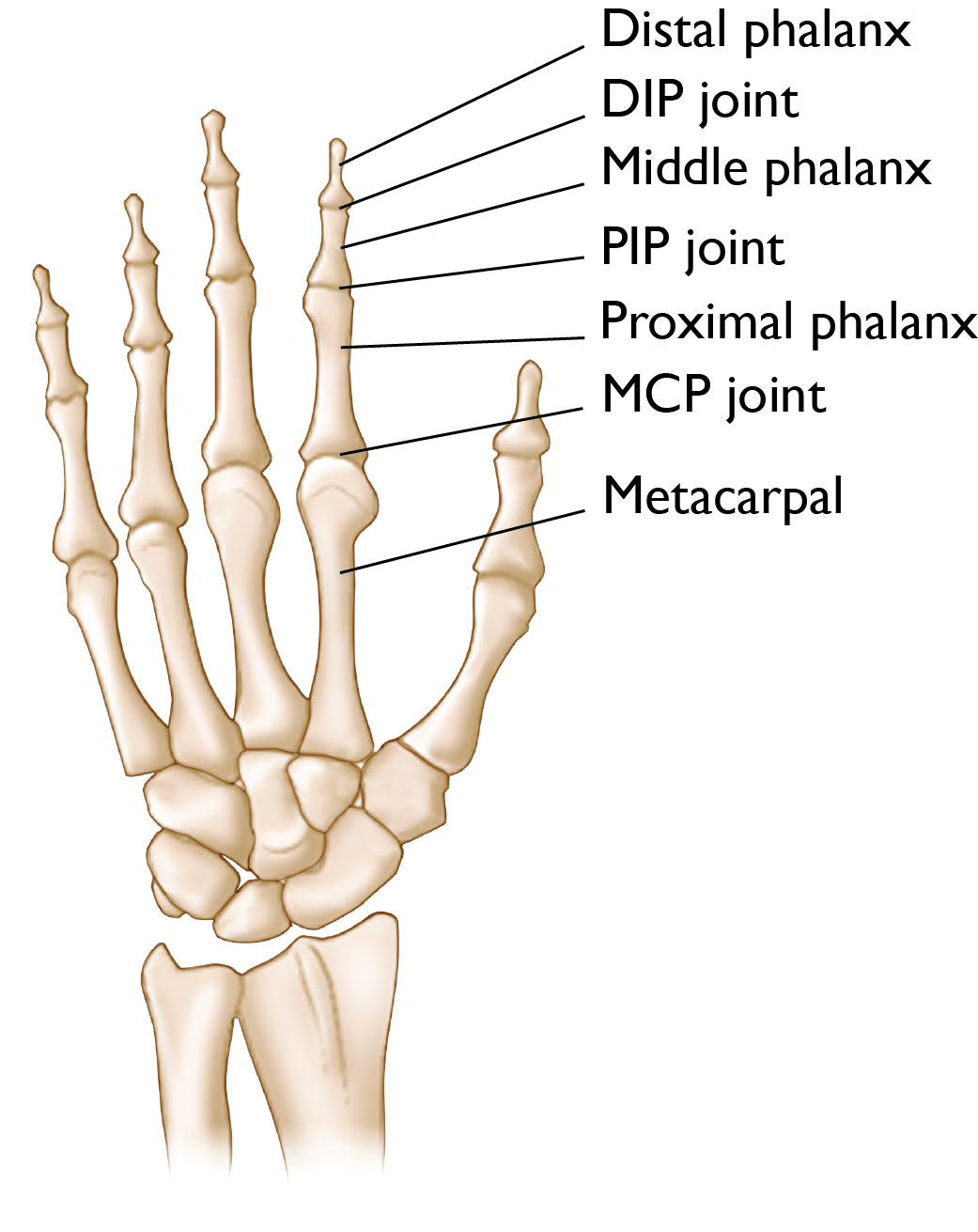
Each finger (not the thumb) has three bones with joints between them.
- The distal phalanx is the last bone of the finger at the very tip. It connects to the middle phalanx, the middle bone of the finger, via the DIP joint.
- The middle phalanx connects to the proximal phalanx, the bone in the finger closest to the hand, via the PIP joint.
- The proximal phalanx connects the finger to the hand (metacarpal) via the MCP joint.
The joint surface of each bone is covered with articular cartilage — a smooth and slick substance that protects and cushions the bones as you move your forearm, wrist, and hand.
Other important structures include:
- Ligaments help to keep the bones in their proper position and stabilize the joints while allowing for motion.
- Tendons are strong cords that connect muscles to bone. When muscles contract, their tendon(s) pull through the attachments to bone and cause a joint to bend and flex.
- Nerves, including the ulnar and median nerves, provide feeling and function in the hand and wrist.
Common Causes of Hand and Wrist Pain
Arthritis
The hand and wrist have multiple small joints that work together to produce motion, including the fine motion needed to thread a needle or tie a shoelace. When the joints are affected by arthritis, activities of daily living can be difficult. Over time, arthritic joints can lose their normal shape. This causes more pain and further limits motion. Some activities may become impossible.
Arthritis can occur in many areas of the hand and wrist and can have more than one cause. Learn more:
Soft Tissue Issues (Including Nerve Injuries)
Carpal tunnel syndrome is a common condition that causes numbness, tingling, and pain in the hand and forearm. In most patients, carpal tunnel syndrome gets worse over time. If untreated for too long, it can lead to permanent dysfunction of the hand, including loss of sensation in the fingers and weakness.
Learn more: Carpal Tunnel Syndrome
De Quervain's tenosynovitis is swelling of the tendons that run along the thumb side of the wrist and attach to the base of the thumb. This condition can cause pain and tenderness along the thumb side of the wrist with specific movements.
Learn more: De Quervain's Tenosynovitis
Dupuytren's contracture occurs when the palmar fascia thickens and shortens over time and makes it difficult or impossible to fully straighten the fingers. In some people, a worsening Dupuytren's contracture can interfere with hand function. When this occurs, there are nonsurgical and surgical treatments available to help slow the progression of the disease and improve finger motion.
Learn more: Dupuytren's Disease - Dupuytren's Contracture
Ganglion cysts are the most common mass or lump in the hand; most often, they develop on the back of the wrist. They are not cancerous and, in most cases, are harmless. While ganglion cysts do not require treatment, if it affects function or you are unhappy with how it looks, there are several treatment options available.
Learn more: Ganglion Cyst of the Wrist and Hand
A sprained finger occurs when the ligaments that support the finger joint(s) are stretched, such as when a strong force bends the finger backward, away from the palm. Milder sprains can typically be treated nonsurgically. For more severe sprains, surgery may be needed to restore stability to the joint.
Learn more: Finger Sprains
Thumb sprains most often involve the thumb ulnar collateral ligament (UCL). Injuries to the UCL can be painful, make your thumb feel loose or unstable, and weaken your ability to pinch or grasp objects between your thumb and index finger. Treatment may involve wearing a splint or cast, or surgery to restore joint stability.
Learn more: Sprained Thumb
Trigger finger is a condition affecting tendons that flex the fingers and thumb, typically resulting in a sensation of locking or catching when you bend and straighten your digits. Other symptoms may include pain and stiffness in the fingers and thumb.
Learn more: Trigger Finger - Trigger Thumb
Ulnar tunnel syndrome occurs when the ulnar nerve is compressed at the wrist, which can cause numbness and tingling in the little finger (pinky) and the outside of the ring finger. Additionally, you may experience weakness of hand pinch and grip.
Learn more: Ulnar Tunnel Syndrome of the Wrist
Wrist sprains are common injuries that occur when the wrist is bent or twisted forcefully, causing the strong ligaments that support the wrist to stretch beyond their limits or tear. Treatment ranges from home remedies for mild sprains to repair surgery for severe sprains.
Learn more: Wrist Sprains
Fractures and Dislocations
A distal radius fracture occurs when the radius — one of the two long bones in the forearm — breaks close to the wrist. Distal radius fractures are very common. In fact, the radius is the most commonly broken bone in the arm.
Learn more: Distal Radius Fractures (Broken Wrist)
A finger fracture is not a minor injury. When you fracture a finger bone, it can cause dysfunction affecting your entire hand. Without appropriate treatment, your broken finger may end up misaligned, stiff, or painful.
Learn more: Finger Fractures - OrthoInfo - AAOS
A hand fracture can be caused by a fall, crush injury, or twisting injury, or through direct contact in sports. Often, a hand fracture will heal well with nonsurgical treatment. Surgery may be needed for more serious fractures or those that do not align properly.
Learn more: Hand Fractures
A scaphoid (navicular) fracture, a break in one of the carpal bones of the wrist, occurs most often after a fall onto an outstretched hand. Symptoms typically include swelling and pain in the wrist just below the base of the thumb. Pinching, grasping, pushing, and pulling often make pain worse.
Learn more: Scaphoid Fracture of the Wrist
A thumb fracture can be a serious problem. Loss of thumb function due to a fracture can affect your ability to grasp items, and certain types of thumb fractures can increase the risk of arthritis later in life. With appropriate treatment, including surgery in some cases, many thumb fractures have good outcomes.
Learn more: Thumb Fractures
Treatments for Hand and Wrist Pain
Many patients with hand and wrist pain will respond to simple treatment methods such as altering activities, rest, physical therapy, and medication. However, surgery may be required to resolve some hand and wrist problems.
These are some of the nonsurgical and surgical treatments commonly used to treat hand and wrist pain. Other treatments are covered in the condition articles listed above.
- Carpal Tunnel Syndrome Therapeutic Exercises
- Cortisone Shot (Steroid Injection)
- Finger (IP Joint) Fusion
- Thumb Carpometacarpal (CMC) Arthroplasty
- What Are NSAIDs?
- Wrist Arthroscopy
- Wrist Joint Replacement (Wrist Arthroplasty)
Because each patient is unique, your doctor will develop a treatment plan that is best for your condition and overall health, and that aligns with your goals.
AAOS does not endorse any treatments, procedures, products, or physicians referenced herein. This information is provided as an educational service and is not intended to serve as medical advice. Anyone seeking specific orthopaedic advice or assistance should consult his or her orthopaedic surgeon, or locate one in your area through the AAOS Find an Orthopaedist program on this website.
The content on this website may have been translated from English into other languages using artificial intelligence tools. The translations are provided for the convenience of readers and may not been reviewed or verified by medical professionals. AAOS makes no guarantees regarding the accuracy, reliability, or completeness of the translated information and disclaims all liability for any issues arising from its use. Users are strongly encouraged to refer to the original English content and consult qualified healthcare professionals before making any medical decisions. By using the translated content, you acknowledge and accept these limitations and assume full responsibility for any reliance on the information provided.