






Diseases & Conditions
Pes Anserine (Knee Tendon) Bursitis
Bursae are small, jelly-like sacs that are located throughout the body, including around the shoulder, elbow, hip, knee, and heel. They contain a small amount of fluid and are positioned between bones and soft tissues, acting as cushions to help reduce friction during movement.
Pes anserine bursitis is an inflammation of the bursa located between the tibia (shinbone) and three tendons of the hamstring muscle (sartorius, gracilis, and semitendinosus) on the inner/medial side of the knee. The condition occurs when the bursa becomes irritated and produces extra fluid, which causes it to swell and put pressure on the nearby parts of the knee.
Pain and tenderness on the inner/medial side of your knee, about 2 to 3 inches below the joint, are common symptoms of pes anserine bursitis.
Cause of Pes Anserine Bursitis
Bursitis is usually caused by overuse, or constant friction and stress on the bursa.
Pes anserine bursitis is common in athletes who:
- Put extra strain on their hamstrings or inner knee through repetitive motion, such as runners, swimmers, or cyclists
- Play sports with lateral (side-to-side) movements or sudden changes in direction, such as soccer, tennis, or basketball
People with osteoarthritis of the knee are also at risk.
Several factors can contribute to the development of pes anserine bursitis, including:
- Incorrect training techniques, such as not stretching, doing a lot of running on hills, and suddenly increasing mileage
- Tight hamstring muscles
- Obesity
- Being duck-footed, being flat-footed, or having knock knees
- Osteoarthritis in the knee
Symptoms of Pes Anserine Bursitis
The symptoms of pes anserine bursitis include:
- Pain slowly developing on the inner/medial side of your knee and/or in the center of your shinbone, about 2 to 3 inches below your knee joint
- Pain increasing with exercise or climbing stairs
- Puffiness or tenderness to the touch in this area
- Stiffness or pain after sitting with your knees bent for a long period of time

Diagnosing Pes Anserine Bursitis
Symptoms of pes anserine bursitis may mimic those of a stress fracture, medial meniscus tear, and/or medial collateral ligament sprain.
To see whether you have pes anserine bursitis or a different condition, your doctor will examine your knee and talk to you about your symptoms.
Treatment for Pes Anserine Bursitis
Treatment of pes anserine bursitis is almost entirely non-operative.
Athletes with pes anserine bursitis should take steps to modify their workout program to allow healing and prevent the inflammation from coming back.
Other treatments include:
- Rest. Stop doing the activity or substitute a different activity until the bursitis clears up.
- Ice. Apply ice at regular intervals 3 or 4 times a day for 20 minutes at a time. Do not apply ice directly to the skin.
- Anti-inflammatory medication. Non-steroidal anti-inflammatory medication (such as aspirin, ibuprofen, and naproxen) may ease the pain and reduce the inflammation. You can also use topical NSAIDs, like over-the-counter diclofenac gel.
- Injection. Your doctor may inject a solution of local anesthetic and a potent steroidal anti-inflammatory agent into the bursa, which often provides prompt relief.
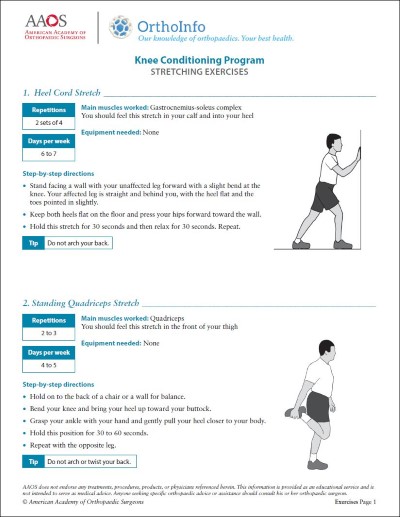
- Physical therapy. Your doctor may recommend physical therapy for specific stretching exercises, as well as ice and ultrasound treatments.
Contributed and/or Updated by
Peer-Reviewed by
AAOS does not endorse any treatments, procedures, products, or physicians referenced herein. This information is provided as an educational service and is not intended to serve as medical advice. Anyone seeking specific orthopaedic advice or assistance should consult his or her orthopaedic surgeon, or locate one in your area through the AAOS Find an Orthopaedist program on this website.
The content on this website may have been translated from English into other languages using artificial intelligence tools. The translations are provided for the convenience of readers and may not been reviewed or verified by medical professionals. AAOS makes no guarantees regarding the accuracy, reliability, or completeness of the translated information and disclaims all liability for any issues arising from its use. Users are strongly encouraged to refer to the original English content and consult qualified healthcare professionals before making any medical decisions. By using the translated content, you acknowledge and accept these limitations and assume full responsibility for any reliance on the information provided.